

Controversial Bengali Movies: Gandu, Chatrak, Kangal Malsat, Neel Akasher Neechey (Under the Blue Sky) and More
Nine Bengali films that were stopped, cut, refused or fought over, from Neel Akasher Neechey in 1959 to Kalponik in 2025. Only what the record shows: who objected, what happened, and how each film reached viewers.
Follow for the next update
Never miss a Bengali release. We ping you for new films, big scores and the Friday digest. One tap to stop.
Films in this article
Checked on 28 October 2026. This page lists Bengali-language films that drew a ban, a refusal, a cut or public anger, and says only what published sources record. “Controversial” here means a dispute over censorship, nudity or a taboo theme. It is not a ranking and not a list of adult films.
Bengali cinema has a long record of films that pushed against censors and public taste. Some were stopped for politics, some for sexual content, some for neither. Below, each film is named the way Bengali viewers search for it, with the English title in brackets where there is an established one.
Banned or refused by the authorities
Neel Akasher Neechey (Under the Blue Sky), 1959
Mrinal Sen’s film follows a Chinese silk seller, Wang Lu, in 1930s Calcutta, and his friendship with Basanti, the wife of a nationalist lawyer. The Government of India banned it for two months because of what the record calls its “overt political overtones” (Wikipedia). It is the earliest case on this page and the only one stopped purely for politics.
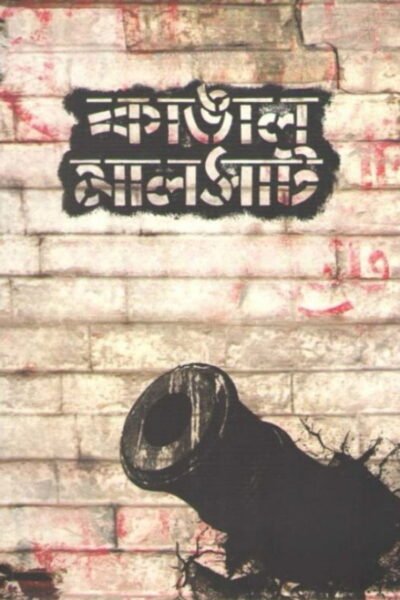
Kangal Malsat, 2013
Suman Mukhopadhyay’s political satire, based on Nabarun Bhattacharya’s novel, was refused certification by the Central Board of Film Certification in February 2013. The board cited abusive language, sexuality, a flippant treatment of social movements and a negative portrayal of Stalin. In early March 2013 the Film Certification Appellate Tribunal cleared it, rejected most of the objections, barred the full oath-taking of the West Bengal Chief Minister and ordered the 76 swear words cut by half. A scene with Disha Mishra also drew criticism for nudity. It was set for release on 2 August 2013 (Wikipedia, citing press reports). See the Kangal Malsat page.
Doob (No Bed of Roses), 2017
Mostofa Sarwar Farooki’s Bangladeshi-Indian drama, produced by Irrfan Khan among others, was held up in Bangladesh when the Ministry of Information halted its no-objection certificate on 16 February 2017. Earlier, Meher Afroz Shaon, the wife of the writer Humayun Ahmed, had told the government that part of the film resembled a period of her late husband’s life. It premiered at the Shanghai International Film Festival on 25 June 2017 and was released in Bangladesh and India on 27 October 2017 (Wikipedia). The record shows a halted certificate, not a formal ban.
Kalponik (shown at KIFF 2024, censor dispute in 2025)
Arka Mukhopadhyay’s film was in the Bengali Panorama at the Kolkata International Film Festival in 2024. It is a fiction about the unearthing of an ancient temple and links between parts of the media and political parties. The Censor Board objected to a few scenes and the storyline, suggested several cuts, and recommended sending it to the CBFC Revising Committee, which watched it in Mumbai on 22 June 2025. The makers had wanted a commercial release on 11 July. The director called the committee’s worries “unfounded” (PTI, via The Tribune, 29 July 2025). We have not found a final certificate.
Nudity and sex: the films people argue about
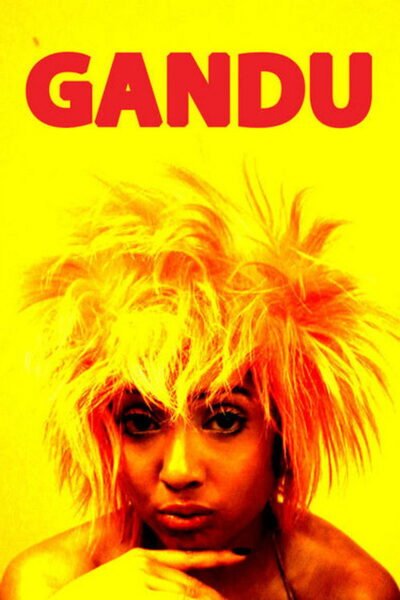
Gandu, 2010
Qaushiq Mukherjee (“Q”) made this black-and-white Bengali erotic art drama with music by the band Five Little Indians. It caused controversy over its language, nudity and sex scenes, and many people reportedly walked out during the sex scenes. It had its international premiere at the South Asian International Film Festival in New York on 29 October 2010, where it won the Jury Award for Best Film, was an official selection at the 2011 Berlin International Film Festival, and was shown at Slamdance. Its first public screening in India came only in 2012, at the Osian Film Festival (Wikipedia). It has no regular theatrical release on record. This is an adults-only film.
Chatrak, 2011
Vimukthi Jayasundara’s film follows Rahul, an architect back from Dubai, and his girlfriend Paoli (Paoli Dam) as they search for his brother. A scene with explicit frontal nudity caused an uproar in India, especially in Kolkata, where much of it was shot. A version without that scene was shown at the 2011 Kolkata Film Festival, and the director said several versions exist and that he was surprised by the reaction (Wikipedia, citing The Times of India, September and October 2011).
Cosmic Sex, 2013
Amitabh Chakraborty’s film is an art-house erotic thriller about the link between sex and spirituality. Rii Sen won Best Actress at the Osian’s Cinefan Festival, where it was listed as a 2013 release, and it was the closing film of the Cine Central Film Festival in Kolkata (Wikipedia). We found no certification dispute on record.
Boldness of theme, not of scenes
Arekti Premer Golpo (Just Another Love Story), 2010
Kaushik Ganguly’s film, with Rituparno Ghosh, Jisshu Sengupta and Indraneil Sengupta, is described as the first film on queerness shot after the Delhi High Court struck down parts of Section 377 in July 2009. It premiered at the 60th Berlin International Film Festival in 2010 and won the Silver Peacock at IFFI 2010. The Supreme Court overturned the High Court ruling in 2013 (Wikipedia).
Chitrangada: The Crowning Wish, 2012
Rituparno Ghosh wrote, directed and starred in this story of a choreographer who decides on gender change while staging Tagore’s play Chitrangada. It won the Special Jury Award at the 60th National Film Awards. Wikipedia records no censorship dispute, so it sits here for its theme alone.
Why a film lands on lists like this
- Politics: Neel Akasher Neechey and Kangal Malsat were stopped for what they said about power, not only for what they showed.
- Nudity and sex: Gandu, Chatrak and Cosmic Sex are about bodies and desire. Most were shown first at festivals.
- Identity: Arekti Premer Golpo and Chitrangada were bold for their subjects.
- Real people: Doob was held up over a resemblance to a real writer’s life.
For how Indian film certificates work, see Bengali movie certificates explained.
Questions people ask
Which Bengali films were banned in India?
On the record we found, Neel Akasher Neechey was banned for two months in 1959. Kangal Malsat was refused certification in 2013 and cleared on appeal with cuts. Gandu did not get an ordinary release.
What is the most controversial Bengali film?
There is no agreed answer. Gandu and Chatrak caused the strongest public reaction over nudity, and Kangal Malsat the clearest legal fight with the censor board.
Are these films available to watch?
Availability changes, and some, like Gandu, have never had a regular release. Check the film’s page or a streaming search before assuming.
Sources
- Wikipedia pages for Neel Akasher Neechey, Gandu, Chatrak, Kangal Malsat, Cosmic Sex, Doob: No Bed of Roses, Arekti Premer Golpo and Chitrangada: The Crowning Wish
- The Tribune (PTI): Kalponik and the Censor Board
- Further reading: The Times of India: 10 controversial Bengali movies that broke the stereotypes
More from the site
Swastika Mukherjee (স্বস্তিকা মুখার্জি) Boyfriends, Husband and Relationships: Jeet, Parambrata and Srijit, Past to Present
27 Oct 2026

Eken Babu Franchise at National Multiplexes: ₹1.79 Cr in 2023, ₹3.24 Cr in 2025, ₹2.77 Cr in Week One of 2026
27 Oct 2026

KIFF 2026: Rajinikanth and Prabhas Expected at Kolkata Film Festival, Says Mithun Chakraborty
27 Oct 2026