
Real History of Emperor vs Sarat Chandra: Pather Dabi, Tagore and the British Ban
A banned novel, a difficult letter and an unsent reply: the documented history behind Emperor vs Sarat Chandra, with sources and a clear distinction between history and fiction.
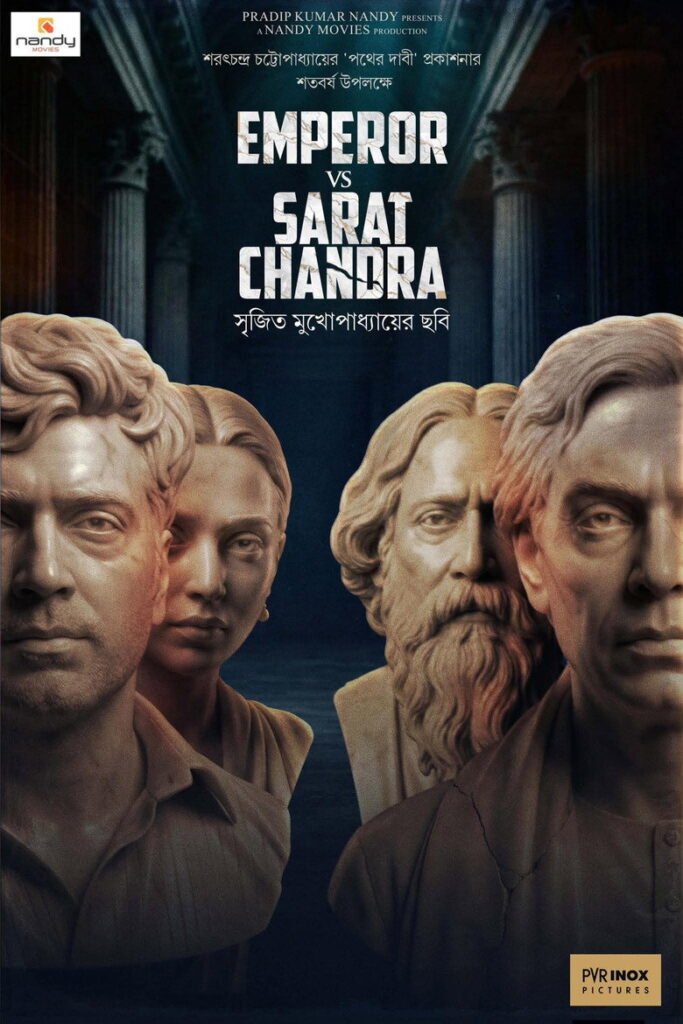
Image: artwork for the film Emperor vs Sarat Chandra, not an archival photograph.
The real history of Emperor vs Sarat Chandra begins with a banned novel and a disagreement preserved in letters. Sarat Chandra Chattopadhyay’s Pather Dabi appeared as a book in 1926; the colonial government ordered its confiscation in January 1927. His argument with Rabindranath Tagore was real. Sabyasachi, the revolutionary brought to the screen, belongs to the novel.
Those distinctions matter. A historical drama can connect an author’s life with the world he imagined, but an effective scene is not automatically a historical record. Here is what the sources establish, where accounts disagree, and what viewers should treat with care.
What is Pather Dabi about?
Pather Dabi is a political novel about a secret revolutionary organisation working to end British rule in India. Much of its world is centred on Burma, now Myanmar. Its elusive leader, Sabyasachi, also known as the Doctor, moves through disguises and international connections rather than fighting as a conventional battlefield hero. He is a fictional character, not Sarat Chandra himself. The Ministry of Culture’s account identifies the organisation, its Burmese setting and Sabyasachi’s opposition to colonial oppression.
The story is also about the people drawn into that cause. Apurba, a young Bengali man living in Burma, encounters the organisation through Bharati; Sumitra is another important woman within its circle. Personal attachments, fear and loyalty complicate the political mission. The novel’s arguments matter as much as its conspiracies: what should freedom cost, and can a struggle for liberation justify cruelty? Bharati’s conversations with the Doctor allow readers to question the revolutionary ideal, rather than simply admire a fearless hero. Read the Bengali novel, including their conversation in chapter 22.
Why is Pather Dabi important?
Its importance goes beyond being a book the British banned. It gave readers an imagined revolutionary they could identify with, and made fiction a place to argue about resistance and colonial power. In her researched history for The Indian Express, Nikita Mohta draws on scholars including Ashish Nandy and Stephen Morton to describe Sabyasachi’s influence and the risks readers took to possess the suppressed novel. Read the historical account.
That is why the book matters to Emperor vs Sarat Chandra: the controversy concerns the power of a story to challenge authority, as well as a writer’s freedom to publish it. The novel’s revolutionary world and the author’s real dispute with Tagore are connected, but they are different kinds of evidence. Understanding that distinction helps viewers recognise where the film moves between literature and documented history.
What happened to Pather Dabi?
Pather Dabi was first serialised in Bangabani before its publication in book form in August 1926. Its fictional revolutionary organisation challenges colonial rule. This was politically charged storytelling, rather than a transcript of one real revolutionary’s career. The collected edition’s bibliographical note dates the first book publication to 31 August 1926. Read the publication note in the collected works.
Ankhi Mukherjee’s study in the Cambridge Journal of Postcolonial Literary Inquiry identifies the government order of 4 January 1927 as the step recommending confiscation and a ban on distribution. She also describes the protests and legislative debate surrounding the suppression. The conflict was therefore about the circulation and political force of a book, not simply a personal quarrel between a novelist and an official. See Mukherjee’s discussion, pages 5–6.
Did Tagore support the British ban?
The letter is more complicated than that shorthand suggests. Tagore recognised the novel’s hostility to British rule and argued that a writer who challenged power should be prepared for retaliation. He also described British tolerance in terms that Sarat Chandra found deeply disappointing. Those passages should not be softened or left out.
But Tagore did not tell him to stop writing. He explicitly rejected putting down the pen and stressed the lasting reach of fiction. Our reading is that the disagreement concerned the writer’s responsibility under repression and the response to punishment; reducing it to unconditional approval of censorship loses part of the argument. Readers can judge the language themselves in the printed Bengali letter and its continuation in the collected correspondence.
Sarat Chandra’s answer: punishment does not end the right to protest
Sarat Chandra’s surviving response insists that he had understood the danger when he wrote and published the book. He rejected the idea that asking for protest meant expecting personal immunity. His central objection was that the government’s ability to punish did not make opposition to that punishment illegitimate.
One detail is essential: the editors of the collected correspondence say this reply was drafted but not sent to Tagore, following advice from friends. It is evidence of Sarat Chandra’s thinking, not proof that Tagore received those words. A separate letter to Umaprasad records his disappointment. Read the reply and the editors’ note.
A date to check before repeating the story
ThePrint’s feature dates Tagore’s quoted letter to 4 January 1927. The Bengali text reproduced in the collected correspondence instead carries 27 Magh 1333; Sarat Chandra’s draft response carries 2 Falgun 1333. These are dates in February 1927. We retain the printed Bengali dates rather than treating the ban order’s date as the date of Tagore’s letter. Compare ThePrint’s account with the reproduced correspondence.
Real people, fictional revolutionary
- Sarat Chandra and Tagore: historical writers whose disagreement can be examined through their correspondence.
- Pather Dabi and its suppression: a published novel and a documented colonial action.
- Sabyasachi: a character in the novel, not a historical person simply because he shares the screen with real people. Comparisons with actual revolutionaries are interpretations, not proof of a single real-life identity.
- Conversations and confrontations: a film’s dialogue or private meeting needs its own evidence before being repeated as something that happened.
In his interview with ThePrint, Srijit Mukherji says the idea developed while he was reading the correspondence. That is evidence for the filmmaker’s starting point, not independent confirmation of every scene. We have not verified a court judgment or trial transcript matching the film’s title; this article does not present the film as a reconstruction of a proven courtroom case.
The disagreement was not their entire relationship
Later correspondence complicates any picture of a permanent personal rupture. A letter from Sarat Chandra dated 29 Ashwin 1339 expresses gratitude for Tagore’s blessing. The collected works also reproduce Tagore’s birthday messages and his dedication of Kaler Jatra to Sarat Chandra. These documents do not erase the earlier hurt. They show why one dispute should not stand in for the whole relationship. Read the later letters and messages.
Nor should the controversy become a blanket description of Tagore’s politics. His renunciation of his knighthood after the Jallianwala Bagh massacre in 1919 is documented by the Ministry of Culture’s historical account. That act does not cancel out his difficult remarks about Pather Dabi; both belong in an honest assessment.
A short timeline beyond the film
- 1926: the serialised novel becomes a book; the collected edition gives 31 August as the publication date.
- 4 January 1927: the confiscation and distribution-ban order identified in Mukherjee’s historical study.
- February 1927: the disagreement recorded in Tagore’s letter and Sarat Chandra’s draft response.
- 1939: the ban is lifted under the Fazlul Haque government, as discussed in “Burma–Bengal Crossings”.
- 1947: an earlier screen adaptation already exists: the British Library catalogues a Pather Dabi film booklet whose collector recorded a 7 March 1947 release. The booklet is evidence of that earlier film, not evidence for scenes in the 2026 production. View the archive record.
What this history adds to watching Emperor vs Sarat Chandra
The letters leave a question that a simple hero-and-villain account cannot settle: does accepting the danger of dissent mean accepting punishment without public protest? Sarat Chandra’s answer was no. Tagore’s emphasis fell on the writer’s capacity to endure the consequences and continue writing. Their disagreement gives viewers a useful way to question the film, rather than treating either writer as a slogan.
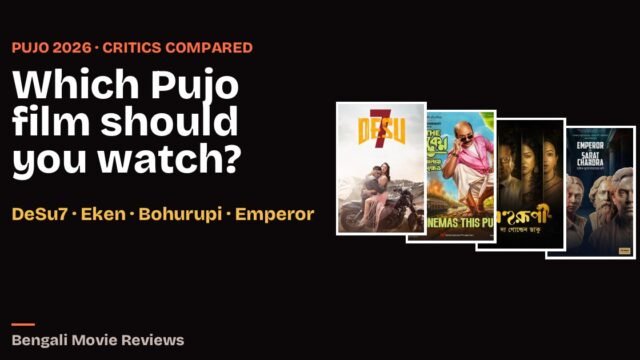
For the film itself, see the individual critics’ reviews. For a festival choice, compare it with the other releases in our Durga Puja review comparison. Historical accuracy and whether a film works as cinema are related questions, but they require different evidence.
Emperor vs Sarat Chandra: real-history FAQs
Quick answers about the book, the ban and the letters. Open a question for the evidence behind it.
Is Emperor vs Sarat Chandra based on a true story?
It draws on real history: Sarat Chandra Chattopadhyay’s novel Pather Dabi, its suppression by the colonial government and his disagreement with Rabindranath Tagore. That does not establish every scene as fact. Sabyasachi belongs to the novel, and we have not verified a court transcript matching the film’s title.
Why did the British government ban Pather Dabi?
The novel portrays an organisation challenging colonial rule. Ankhi Mukherjee’s historical study records an order recommending confiscation and a ban on distribution on 4 January 1927. See the scholarly account, pages 5–6.
When was Pather Dabi first published?
It appeared first as a serial in Bangabani. The bibliographical note in Sarat Chandra’s collected works dates the first book edition to 31 August 1926. Read the publication note.
Did Rabindranath Tagore support the ban on Pather Dabi?
His letter cannot fairly be reduced to a simple yes or no. Tagore stressed the consequences of challenging colonial power and described British tolerance in terms Sarat Chandra disputed. He also urged the writer to keep writing. Our reading is that their disagreement concerned repression, endurance and the right to protest. Read Tagore’s Bengali letter.
Did Sarat Chandra send his reply to Tagore?
The editors of the collected correspondence say that his response was drafted but not sent, following advice from friends. It records what Sarat Chandra wanted to say, but does not prove that Tagore received it. See the reply and editorial note.
Was Sabyasachi a real person?
Sabyasachi is a fictional revolutionary in Pather Dabi. Connections readers make with historical revolutionaries are interpretations; the character should not be presented as the documented biography of one real person.
When was the ban on Pather Dabi lifted?
The ban was lifted in 1939 under the Fazlul Haque government, according to the historical study “Burma–Bengal Crossings”. This happened after Sarat Chandra’s death in 1938.
Did the dispute end Tagore and Sarat Chandra’s relationship?
Later correspondence shows continuing respect, including Sarat Chandra’s gratitude for Tagore’s blessing and Tagore’s birthday messages. These documents complicate the idea of a permanent break. Read the later letters.
How we checked this article
We used the Bengali correspondence reproduced in the 1960 collected works, scholarly research, an archive catalogue and government historical material, alongside contemporary reporting. The online letters are reproductions, not autograph manuscripts inspected by BMR. Interpretations are identified as our reading; the film has not been checked scene by scene. Where dates conflict, we explain the discrepancy. No dialogue has been invented, and no modern publication is treated as the sole authority.
Follow for the next update
Never miss a Bengali release. We ping you for new films, big scores and the Friday digest. One tap to stop.